Who doesn’t want even, smooth skin all through the hottest summer months with little hassle? Sun and heat make melasma darker, so a summer holiday plan means day-to-day protection along with heavy-duty skin maintenance. Below, you’ll find what helps your skin, which in-office options a board-certified dermatologist may offer, and smart habits you can start today. Every recommendation herein is founded on modern dermatology recommendations and published research—simplified, practical, and written for you.
Why does summer darken melasma?
Melasma darkens as skin reacts to ultraviolet (UVA/UVB) rays and sunlight. Hormones, pregnancy, and some medications can predispose the skin to darken more easily. It is the reason why sunscreen is not effective unless it also blocks visible light. Recommendations in dermatology include daily use of broad-spectrum SPF 30+, being in shade as much as possible, putting on UPF hats, and reapplication of sunscreen every 2 to 3 hours.
Visible light protection is necessary. Tinted mineral sunscreens containing iron oxide protect your skin better against the spectrum of light that causes skin pigmentation in melasma.
What works at home (and why)
Prescription topicals. Hydroquinone and “triple-combination” cream (hydroquinone + tretinoin + mild steroid) are commonly used as first-line to regulate/reduce melanin formation and speed up cell turnover. These are utilized in time-limited courses under a dermatologist’s supervision.
Daily photoprotection. Use broad-spectrum tinted mineral sunscreens (zinc oxide + iron oxides) and wear a brimmed hat. This combination covers UVA1 and visible light—two known reasons behind melasma.
Your dermatologist may discuss. Tranexamic acid (oral or topical) has growing evidence as an adjunct to topical therapy; recent meta-analyses reference improved dosing and reduced relapse when used in conjunction with conventional therapy. Your dermatologist in Springfield will weigh your risks and benefits.
In-office procedures that Dermatology & Mohs Surgery Skin Cancer Center offers
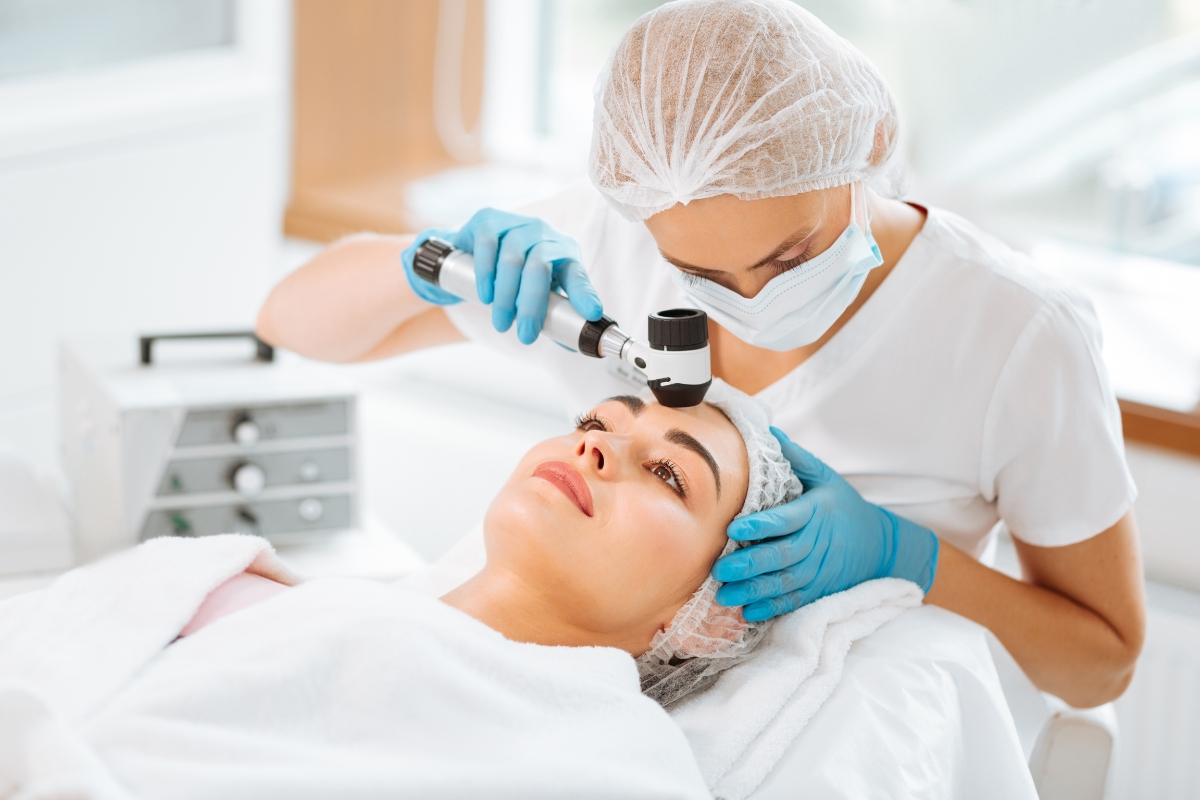
Your skin cancer care team can tailor procedures to your skin type and severity, often in a series:
Laser treatments (rightly selected settings): treat blotchy pigment and sun damage; the right amount of laser is determined by skin color, pigment depth, and time of year.
Dermatology & Mohs Surgery Skin Cancer Center provides laser treatments, prescription creams, medical dermatology, Mohs surgery, surgical dermatology, and cosmetic dermatology. Contact our Springfield office for an excellent foundation for a summer skincare routine you’ll be able to follow.
Your simple summer skincare routine
- Morning: Sunscreen with SPF 30+ (nickel size for face); reapply every two hours when you’re spending time outdoors.
- Evening: Use your prescribed treatment (e.g., hydroquinone or triple-combination cream as instructed).
- Weekly: Peel or do a series of microneedling, determine if they’re suitable for your skin and lifestyle. Follow a skin maintenance schedule to avoid relapse, as is typical with melasma.
Consistency beats one-and-done. With daily sunscreen and skincare therapy, melasma treatments can deliver more uniform, natural-looking results in the long run. This treatment works best as a program—protect, treat, repeat.
Schedule a consultation with Dermatology & Mohs Surgery Skin Cancer Center to tailor your summer-time skincare plan. No drama—just safe, sensible care for real life.